← All OKR examples

Customer success OKRs: real examples, explained

A customer success OKR holds up when it moves retention and adoption, not activity like reviews held.

Customer success sits on the most honest scoreboard in the company: do customers stay and grow? The strongest CS OKRs work backwards from that, into time to value, adoption depth and early risk signals. The weak ones count activity: QBRs held, touchpoints logged, emails sent.

One pattern worth stealing from the examples below: pair every lagging retention number with a leading one the team can move this week. Retention tells you the truth too late to act on it alone.

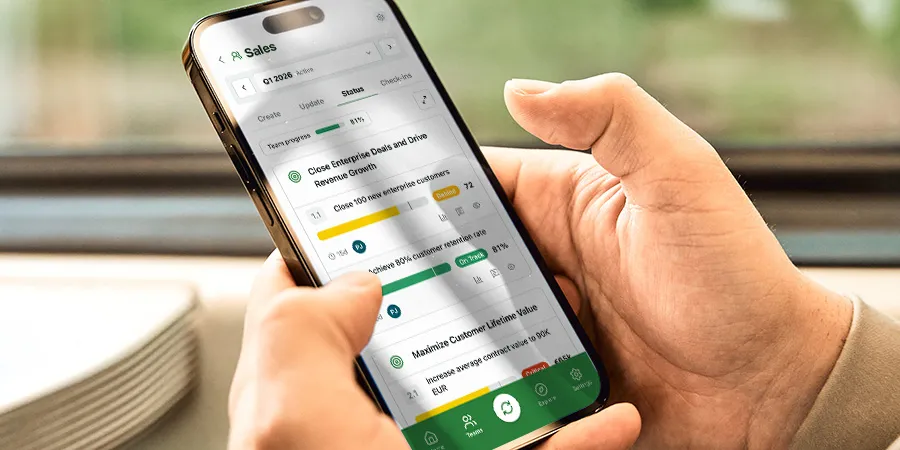
Checking customer health on the go

Objective: Get every new customer to their first win fast

  • Cut time from signature to first value milestone from 45 to 14 days
  • Raise onboarding completion within 30 days from 55% to 90%
  • Lift 90-day adoption of the core module from 60% to 85%

Level: Team Team: Customer success Company type: SaaS

Coach’s score ★★★★★

Measurable ★★★★★

Outcome-based ★★★★

Focused ★★★★

Niklas Olsson

Niklas Olsson · OKR coach

Ambitious, and trying to attack the first days of the customer experience from several angles. The main feedback is that it is focused on the first part of the customer journey, but that is still a very broad focus. Each of these individual key results probably has more than a quarter's work in it to really make it move, depending on resources of course. There are also a couple of built-in definitions here: first value milestone, onboarding completion, core module. In cases like this it is extremely important that the team already knows exactly what those mean, so they can work efficiently toward the OKR.

The core improvement would be to take one of the key results and make that the objective, for example get new customers to value quickly through the core module, and then break down two to four key results from that.

Good questions

Which customer success metrics make good key results?

Gross revenue retention, time to first value, adoption of the modules that predict renewal, and risk-signal coverage. Each one moves when customers get more value, and none can be hit by simply doing more meetings.

Should CSMs carry revenue key results?

Retention revenue, yes: it is the direct result of the work. New expansion revenue depends on who owns the commercial conversation in your model. If sales closes expansion, give CS the leading indicators, like adoption and health, and let the revenue land where the deal is signed.

Now write yours

OKRnest gives your team the structure these examples are built on, and a weekly check-in habit that keeps them alive. Free for up to 3 users.